
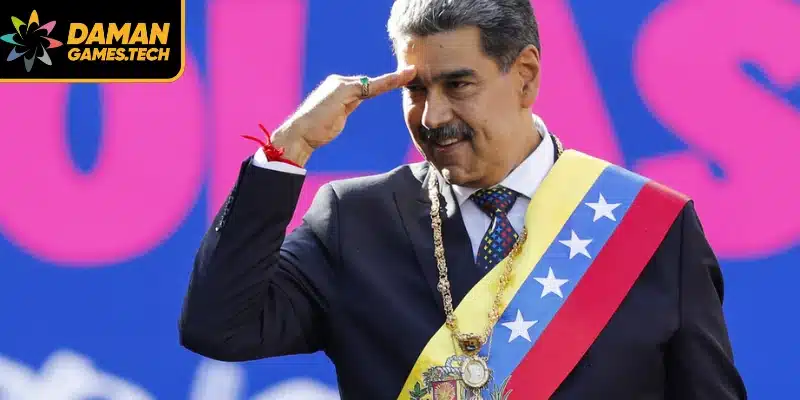
Venezuela president leadership represents a pivotal chapter in modern South American history, influencing regional stability and international economic policies significantly. Like the unpredictable rounds of the Daman Game, where strategy and timing shape outcomes, navigating through a maze of diplomatic hurdles and domestic expectations, the current administration continues to reshape the nation’s future path.
A brief introduction to the Venezuela president
The Venezuela president occupies a central role in a nation defined by its vast natural wealth and complex social dynamics, driving policies that resonate far beyond the country’s borders. This figure oversees a government that has faced numerous internal challenges while attempting to maintain its authority in an increasingly polarized political environment within the region.
Such leadership requires a delicate balance of maintaining military loyalty and managing the expectations of a diverse and vocal domestic population. International perspectives on the administration remain deeply divided, as global powers weigh the strategic importance of the nation against concerns over democratic processes and human rights standards.
Economic reforms and social programs are frequently at the forefront of the state’s agenda, aiming to stabilize a currency that has experienced historic fluctuations against foreign denominations. Every official statement or legislative move by the leader is scrutinized by financial markets and diplomatic circles for hints of future directional shifts.
Daman Game provides a sophisticated lens through which analytical minds can observe the patterns of power and strategic maneuvering that characterize such high-stakes political landscapes today. Engaging with the narrative of national governance offers a unique opportunity to understand the intricate machinery of statecraft and the relentless pursuit of ideological goals.
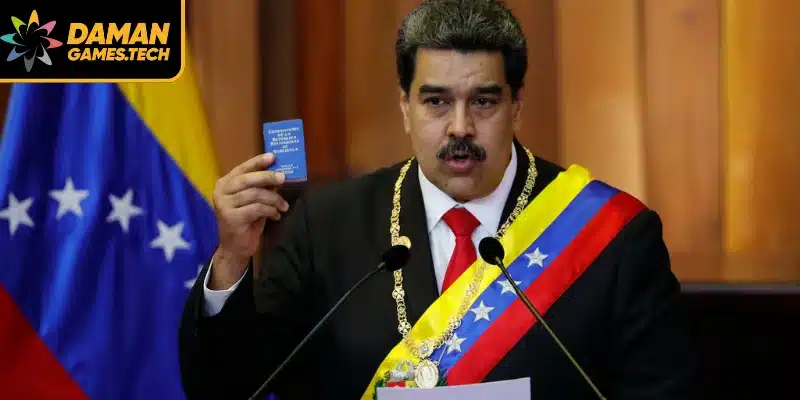
Venezuela president claims ultimatum from US forces
Current diplomatic tensions have reached a fever pitch as the administration addresses direct pressure from external powers regarding its internal governance and future electoral processes.
Escalation of diplomatic rhetoric
The Venezuela president recently issued a defiant response to what the state describes as an unacceptable ultimatum concerning its independent sovereign decision-making. These high-level exchanges reflect a long-standing friction between the capital and foreign governments, where conflicting interests over regional security often lead to public confrontations.
Experts suggest that such rhetoric serves to consolidate domestic support by framing external pressure as an infringement on the dignity of the nation. Analysts believe that maintaining this firm stance is essential for the administration to project strength and unity to both allies and rivals.
Impacts on regional security alliances
The Venezuela president’s actions continue to influence the strategic calculations of neighboring countries, many of which must navigate complex relationships with major global powers while managing local crises. The perceived threats of military intervention or severe economic blockades force regional leaders to reconsider their defense pacts and intelligence-sharing agreements to prevent conflict.
Maintaining regional stability requires constant communication and a willingness to engage in multilateral dialogues that respect the complex history of the South American continent. Governments are increasingly looking for ways to balance their own security needs with the collective goal of maintaining peace across the region.
The financial impact of global sanctions
The Venezuela president manages an economy that has been heavily impacted by restrictions on oil exports, leading to a reduction in the availability of foreign exchange. Recent data suggests that the national treasury has sought alternative ways to process transactions totaling over INR 750,000,000,000 to bypass traditional monitored banking systems.
These financial constraints have forced the government to seek new partnerships with eastern powers that are willing to trade outside the conventional dollar-based system. Adapting to these economic limitations requires innovative fiscal management and a strategic realignment of the nation’s primary revenue streams.
Political strategy and resource control challenges
Managing the world’s largest proven oil reserves requires a sophisticated approach to internal security and the maintenance of critical infrastructure under intense external pressure.
Control over national petroleum assets
The Venezuela president maintains a firm grip on the state-owned oil company, viewing it as the primary engine for social development and national independence. Strategic investments of approximately INR 1,250,000,000,000 are reportedly needed to modernize aging extraction facilities and pipelines that have suffered from years of limited access.
Controlling these resources is not merely an economic necessity but a fundamental pillar of the government’s ability to project power domestically and abroad. The administration’s focus on resource sovereignty remains a central theme in its interactions with international energy corporations and foreign investors.
Strategies for internal political stability
Venezuela president advisors have implemented a series of measures designed to ensure the loyalty of the armed forces through various incentive and integration programs. By involving military leaders in the management of key economic sectors, the administration creates a unified front that is resistant to external destabilization attempts.
This internal consolidation is viewed as essential for surviving the current period of intense international scrutiny and the economic hardship facing the nation. Strategic stability depends on the government’s ability to maintain a cohesive structure that can withstand both domestic dissent and foreign pressure.
Venezuela president diversifies trade partners
The Venezuela president has actively sought to expand economic ties with emerging markets in Asia and the Middle East to reduce reliance on traditional consumers. Daman Game observers might note that these new alliances involve complex bartering systems and long-term supply contracts that provide a degree of insulation from sanctions.
Such strategic shifts allow the government to maintain a steady flow of essential goods and services, even when primary revenue streams are targeted. The success of these trade realignments is crucial for the nation’s ability to sustain its social programs and infrastructure development.
The impact of public opinion and the role of social media
Venezuela president communication teams utilize a wide array of digital platforms to bypass traditional media and speak directly to the domestic audience and the diaspora. These efforts focus on highlighting the successes of government social programs while characterizing opposition movements as being influenced by foreign interests seeking national wealth.
Controlling the narrative is a vital component of the modern political struggle, where information is used as a tool to shape public reality. Effectively managing the state’s image on the global stage is a priority for the administration as it seeks to garner international support.
Conclusion
Venezuela president governance remains a critical element of the current geopolitical conversation, requiring deep analysis from those who seek to understand the future of international power. Daman Game invites you to analyze these global trends and the strategic decisions that shape the destiny of various nations today.
