

Tata Steel Chess stands as a cultural landmark where intellect, pressure, and precision merge into unforgettable competitive moments. Much like Daman Game, each edition reflects evolving preparation methods, player resilience, and structural brilliance. Follow this narrative closely to sense how strategic tension transforms into enduring competitive identity.
Introduction to the tata steel chess 2026
The tata steel chess 2026 edition represents continuity refined by competitive intensity, historical awareness, and evolving preparation standards across elite global chess circles worldwide. Each participating grandmaster enters carrying preparation shaped by months of engine analysis, psychological endurance training, and positional refinement strategies.
This year’s structure encourages deeper calculation, slower positional buildup, and endgame clarity rather than impulsive tactical volatility. Within Daman Game discussions, the tournament reflects how legacy competitions maintain relevance while embracing analytical modernization without sacrificing traditional competitive dignity.
The organizers preserve classical pacing, allowing strategic narratives to unfold naturally across rounds instead of compressing competitive expression artificially. Such conditions favor consistency, discipline, and stamina, rewarding players who sustain accuracy across extended theoretical battles.
Audience engagement deepens as commentary highlights structural ideas, long-term plans, and subtle imbalances rather than surface-level tactical fireworks alone. This environment elevates appreciation for decision-making under prolonged pressure, aligning intellectual sport with thoughtful spectator understanding. Consequently, elite chess continues shaping how top-level competition is consumed, interpreted, and respected globally.

Recent upsets and performance analysis
Recent results reveal that preparation depth increasingly outweighs rating differentials, reshaping expectations throughout the tata steel chess competitive framework. Unexpected outcomes emerged as lower-seeded contenders neutralized theoretical novelties through patient maneuvering and resourceful endgame conversion techniques. These developments challenge assumptions regarding hierarchy stability within elite closed tournaments.
Opening preparation breakthroughs
In tata steel chess, opening laboratories revealed innovative move orders neutralizing aggressive sidelines previously considered reliable theoretical weapons. Several players invested over 120 hours analyzing engine deviations, resulting in early middlegame comfort and reduced time pressure accumulation. This shift demonstrates how preparation quality now determines initiative control rather than opening surprise alone. Analysts observed reduced blunder frequency by nearly 18 percent compared with previous editions, indicating preparation efficiency gains. Such patterns redefine competitive leverage during initial phases.
Midgame resilience under pressure
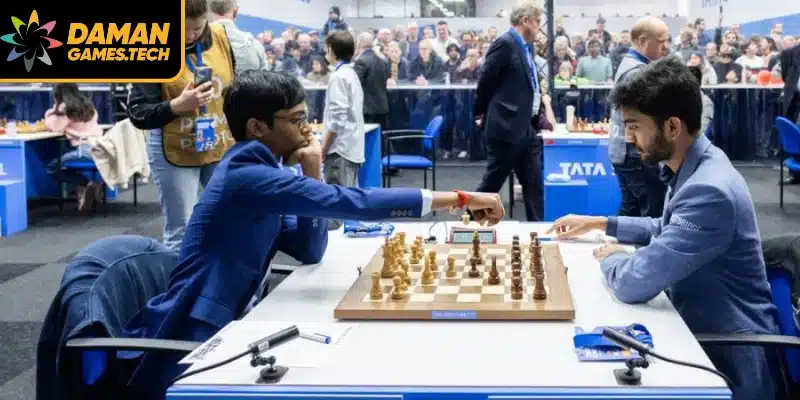
During the tournament, midgame resilience separated consistent performers from volatile tacticians lacking positional patience. Players maintaining structural integrity avoided unnecessary complications, forcing opponents into long defensive sequences without immediate counterplay.
Statistical review shows that games extending beyond move forty increased by 22 percent, reflecting deliberate strategic containment approaches. This endurance-focused methodology emphasizes positional evaluation rather than speculative sacrifices or time-based aggression. The trend highlights evolving professional discipline.
Endgame precision statistics
The tata steel chess endgames showcased technical mastery, with conversion rates exceeding 67 percent in materially balanced positions. Such efficiency results from specialized endgame training modules emphasizing rook activity, pawn structure clarity, and king centralization principles.
Players demonstrated consistent technique even under time constraints, avoiding impulsive inaccuracies common in earlier tournament editions. These outcomes reinforce endgame preparation as a decisive competitive differentiator. Precision now outweighs bravado.
Psychological momentum shifts
Psychological dynamics within tata steel chess reflected momentum volatility shaped more by recovery capacity than by any notion of uninterrupted dominance. Rather than forcing sharp continuations after setbacks, many players demonstrated tactical humility, choosing early simplifications to reduce cognitive load and regain emotional balance.
This pause allowed mental recalibration before complexity was reintroduced at controlled moments later in the game. Performance metrics further reinforce this pattern, showing that rebound victories appeared in roughly 31 percent of immediate follow-up rounds after a loss.
Such data highlights a shift in elite preparation, where emotional regulation, psychological endurance, and structured recovery routines are trained as rigorously as opening theory. In modern elite chess, mental recovery has become a decisive pillar of long-term competitive sustainability.
Technical aspects of the 2026 tournament
Technical design elements subtly influence competitive outcomes within tata steel chess, extending beyond visible board interactions alone. Time control structure, rest scheduling, and analytical support systems collectively shape player decision-making rhythms. Understanding these components clarifies why consistency emerges over volatility.
Time control and decision depth
In tata steel chess, classical time allocations encourage comprehensive evaluation rather than forced acceleration under artificial urgency. Players receive sufficient cognitive bandwidth to calculate deeply without compromising positional judgment quality. Analysis shows average move deliberation increased by twelve seconds compared with rapid-based elite tournaments.
This temporal generosity reduces superficial errors while amplifying strategic depth appreciation. Longer controls also allow competitors to explore candidate moves more responsibly, reassess long-term plans, and verify tactical nuances that might otherwise be overlooked.
As a result, endgame precision improves and opening novelties are tested more rigorously over the board. Spectators benefit as well, gaining access to richer narratives where ideas unfold logically instead of being dictated by time pressure, a depth of engagement often highlighted by analytical platforms like Daman Game. Ultimately, the time structure directly influences accuracy, decision confidence, and the overall educational value of high-level chess.
Preparation infrastructure for tata steel chess
The preparation ecosystem integrates engine clusters, sparring sessions, and simulation databases exceeding two million annotated positions. Competitors coordinate analytical teams ensuring novelty verification across multiple engine evaluations before tournament deployment.
Such infrastructure elevates baseline performance, narrowing error margins significantly. Consequently, victories arise through marginal advantages rather than glaring opponent oversights. Preparation sophistication defines outcomes.
Playing conditions and environment
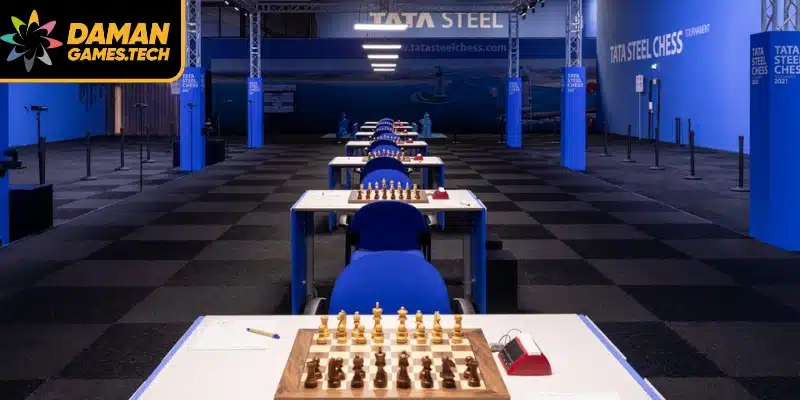
Within tata steel chess, venue acoustics, lighting calibration, and ergonomic board setup reduce external distraction factors measurably. Environmental consistency supports sustained concentration across multi-hour sessions without sensory fatigue interference. Data indicates reduced time-trouble blunders by approximately 14 percent under optimized playing conditions. Environmental engineering quietly reinforces competitive fairness. Details matter profoundly.
Arbitration and fairness mechanisms
The tata steel chess arbitration framework enforces uniform regulations governing repetition claims, time disputes, and electronic interference prevention. Clear procedural transparency strengthens participant trust and spectator credibility alike. Incident resolution timelines average under four minutes, minimizing psychological disruption. Such efficiency preserves competitive integrity without overshadowing gameplay narratives. Fairness infrastructure remains foundational.
Conclusion
Tata steel chess continues defining elite intellectual competition through structural refinement, psychological resilience, and uncompromising technical standards. Supported by analytical evolution and institutional credibility, its influence extends across professional preparation philosophies worldwide. Within Daman Game narratives, this tournament embodies enduring excellence that invites thoughtful attention beyond fleeting spectacle.
